


Malaysia has been ranked joint third in Asia for the highest number of so-called “sugar daddies”, based on figures published by luxury dating platform Seeking Arrangement and shared by Seasia Stats.
According to the data, India tops the regional list with an estimated 338,000 sugar daddies — typically described as wealthy, older men who provide financial support, gifts or other benefits in exchange for companionship or sexual favours. Indonesia follows in second place with 60,250 individuals fitting the category.
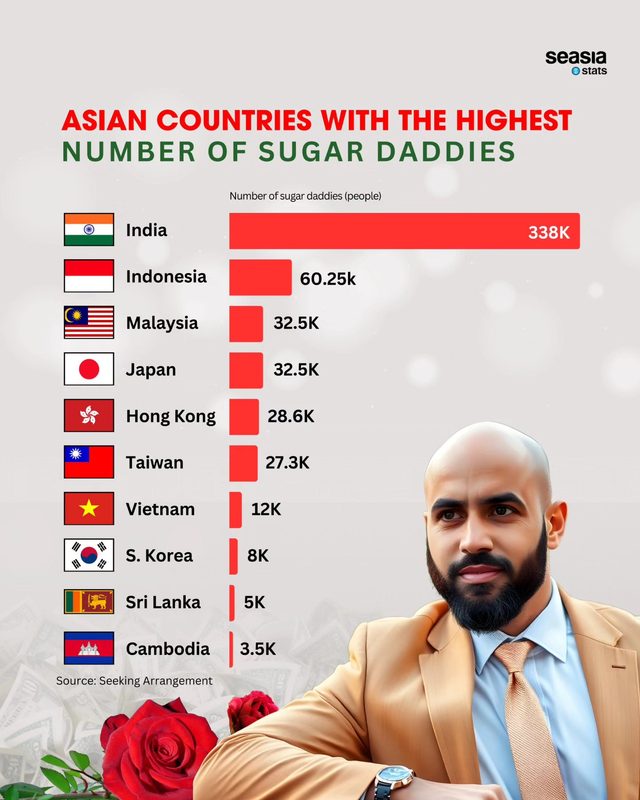
Malaysia and Japan are tied for third, with 32,500 sugar daddies each, highlighting a notable presence of such arrangements in both countries despite differing social and cultural norms across Asia. The figures were visualised and circulated by Seasia Stats via its Instagram platform.
The report also points to a shift over time. In 2021, Seeking Arrangement released a similar survey claiming Malaysia had approximately 42,500 sugar daddies. If the latest figures are accurate, this would indicate a decrease of around 10,000 in less than five years, suggesting possible changes in user behaviour, reporting methods or market dynamics.
Once widely known as the world’s largest sugar dating website, Seeking Arrangement has since rebranded itself as a luxury dating platform catering to “the beautiful, wealthy, and successful”. The company now claims to have more than 52 million members globally, reflecting its efforts to reposition beyond the traditional “sugar dating” label.
The platform openly promotes hypergamy — a relationship practice centred on forming romantic connections with partners of a higher social, financial or educational standing. This concept has increasingly sparked debate, particularly as such dating models become more visible in mainstream discussions about modern relationships and wealth inequality.
Meanwhile, Malaysian digital media outlet SAYS has contacted Seeking Arrangement to seek clarification on the survey’s methodology, including how users were categorised and how the figures were compiled. As public interest grows, questions remain over how representative these numbers are of real-world trends versus platform-specific data.
