


A rare freshwater fish species with a highly restricted distribution in Borneo has been recorded by researchers from Universiti Malaysia Sarawak (UNIMAS) during a biodiversity study at Bak Buan Mabi Waterfall in Kampung Sadir, Padawan.
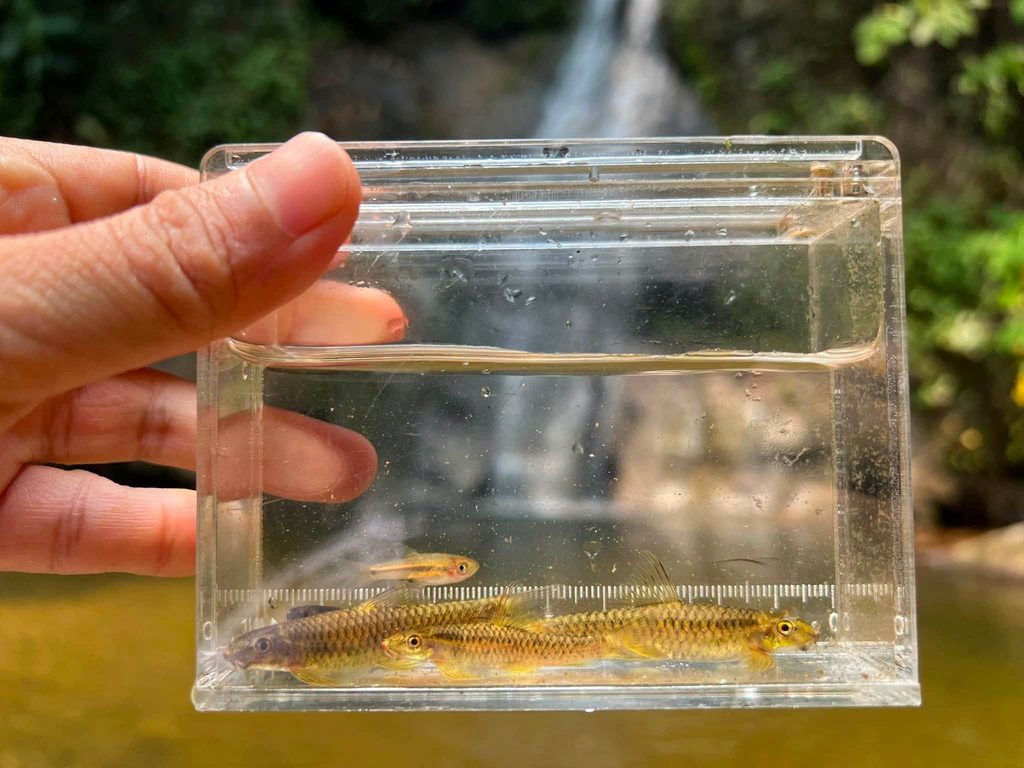
The discovery of Rasbora cryptica, a species from the seluang fish group, is particularly significant as it is only known to occur in southern Sarawak and is currently listed as Data Deficient by the International Union for Conservation of Nature (IUCN).
Senior lecturer from UNIMAS’ Marine and Freshwater Biology Programme, Faculty of Resource Science and Technology, Dr Ahmad Syafiq Ahmad Nasir, said the finding highlighted the importance of scientific documentation in understanding the distribution and condition of Sarawak’s native freshwater species.
“The Data Deficient status means information on the population and conservation status of this species remains insufficient in global scientific databases.
“Therefore, studies such as this are important to document the distribution, population and conservation status of Sarawak’s native species in greater detail,” he said.
The initial sampling also recorded Rasbora sarawakensis, a local species commonly known as seluang Sarawak, as well as Garra borneensis, known as ‘kien tigarung’ among the Bidayuh community in Kampung Sadir.
Dr Ahmad Syafiq said Garra borneensis has a distinctive adaptation as a bottom-dwelling fish, with a mouth resembling a suction disc that allows it to cling to rocks and survive in rocky, fast-flowing streams.
The researchers also found freshwater prawns from the Macrobrachium genus and several species of freshwater molluscs.
However, the total number of species present at the site will only be confirmed after identification and taxonomic verification are completed in the laboratory.
The study was conducted at two sampling stations representing different microhabitats and river flow conditions. Researchers used scoop nets in shallow areas and kick nets to collect benthic organisms from between rocks on the riverbed.
Besides documenting biodiversity, the team also assessed habitat structure, substrate conditions, riverbank vegetation and overall stream ecosystem quality.
“Initial measurements showed that the water quality at Bak Buan Mabi was very good and conducive to aquatic life.
“The river water was clear, had low levels of dissolved substances and contained sufficient dissolved oxygen,” Dr Ahmad Syafiq said.
He added that the water quality data would provide an important baseline for monitoring future changes to the ecosystem.
The sampling site is located within the Padawan-Siburan Cluster under the Sarawak Delta UNESCO Global Geopark, an area highlighting the evolution of landscapes shaped by geological processes over millions of years.
According to Dr Ahmad Syafiq, the area’s rock formations and elevation differences are believed to have contributed to the formation of stepped waterways and a diverse range of aquatic microhabitats.
While the initial survey found that the Bak Buan Mabi river ecosystem remains relatively well preserved, he stressed that recreational activities should be managed responsibly to prevent pollution and habitat degradation.
The study forms part of UNIMAS’ Kampung Angkat MADANI project under an initiative by the Ministry of Finance Malaysia (MoF), which also aims to support biodiversity- and natural heritage-based ecotourism development in Kampung Sadir.
The project involved cooperation from the local community, including Kampung Sadir headman Bobyham William and young villagers working as hiking guides.
Dr Ahmad Syafiq said the next phase would strengthen community involvement through joint mapping exercises and the integration of traditional knowledge with scientific data.
“Local communities are also being trained to carry out continuous community-based biodiversity monitoring,” he said.
Meanwhile, Bobyham expressed his appreciation to UNIMAS and hoped similar research could be carried out at other waterfalls to document the area’s biodiversity and support local conservation efforts.
