


A restaurant in Japan is winning hearts by turning the possibility of wrong food orders into an opportunity to promote understanding and acceptance of people living with dementia.
Known as the Restaurant of Mistaken Orders, the unique dining concept employs elderly people with dementia as waitstaff, openly informing customers that their orders may not always arrive as requested.
While such an arrangement might seem unusual in a country known for its high customer service standards, the initiative has instead brought smiles, emotional moments and a greater sense of connection between diners and staff.
The project first began in 2018 and operates as a pop-up restaurant, partnering with existing eateries that provide their premises for special events.
Its latest event took place on September 21 at Tenryu Ramen in Matsuyama, Ehime Prefecture. The date was particularly meaningful as it coincided with Japan’s Respect for the Aged Day and World Alzheimer’s Day.
Four local senior citizens, aged between 78 and 88, took orders and served customers during the event.
Among the diners were the daughter and granddaughter of one of the elderly waitresses. The daughter was seen wiping away tears in a video as she described how moving it was to watch her mother remain active and interact with others.
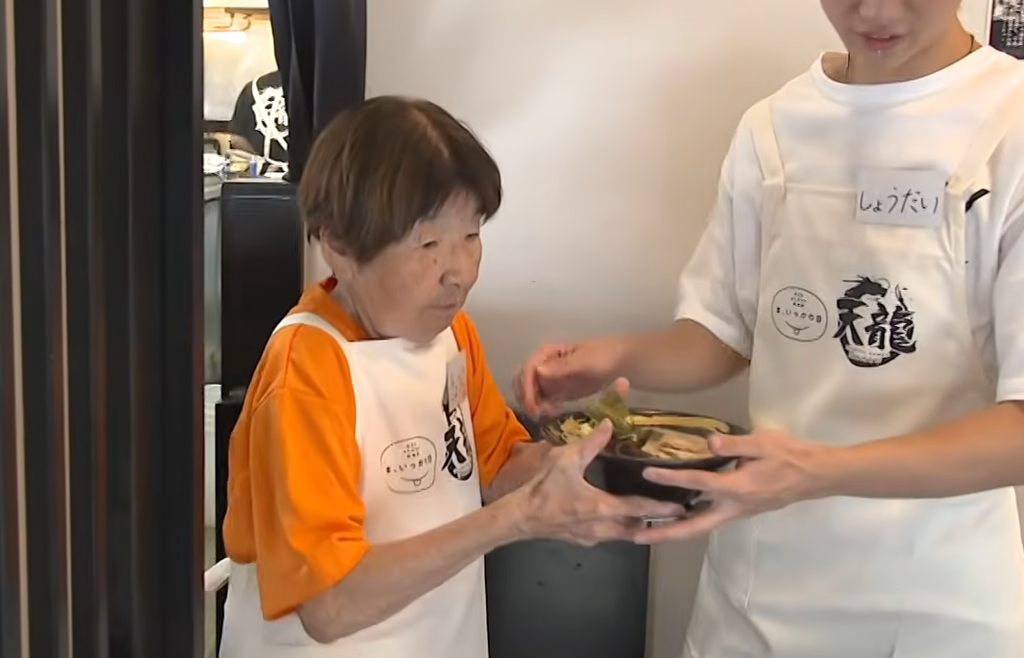
The initiative is not about simply giving people with dementia restaurant jobs. Instead, its main purpose is to challenge misconceptions about the condition, encourage greater patience and understanding, and show that a dementia diagnosis does not necessarily mean someone must become isolated from society.
It also gives participating seniors an opportunity to regain confidence, experience a sense of achievement and continue engaging with their communities.
The organisation hopes its message of openness and understanding will spread throughout Japan and beyond.
One father, who visited the restaurant with his family of four, shared his experience of communicating with the elderly staff.
“If we took our time and listened and spoke patiently, we could understand each other,” he said.
One of the elderly waitresses also expressed her happiness after the event, saying: “I was really happy to get to see so many people and talk with them.”
For the organisers, the project’s success is measured not by profits but by the awareness and compassion it creates.
The restaurant accepts online donations from people who are unable to attend its events but still wish to support its cause.
