


A 77-year-old woman suffered serious injuries after failing to wear a seat belt when the vehicle she was travelling in with her family was involved in a road accident in Taizhou, China, on Sept 27.
The woman was travelling with her son, who was driving, and his wife in the front passenger seat when their vehicle was involved in a collision.
Both the driver and front passenger were wearing their seat belts properly and escaped with relatively minor injuries. The front passenger suffered only a small amount of internal bleeding and was treated without surgery.
The woman in the rear seat, however, was not wearing a seat belt. The force of the collision caused her to suffer a brain haemorrhage and multiple fractures to her limbs.
She was placed under close observation in the emergency intensive care unit, with doctors planning surgery once her condition stabilises.
Emergency department doctors said many people mistakenly believe rear seats are safer and that passengers sitting in the back do not need to wear seat belts.
They warned that during a collision, the force of inertia can propel unrestrained passengers forward at tremendous speed. Besides putting themselves at risk, rear passengers can also crash into people sitting in front, causing potentially serious secondary injuries.
Doctors also urged parents planning road trips with children never to place them in the front passenger seat, particularly not while holding them in their arms.
Children should instead be placed in appropriate child safety seats in the rear of the vehicle.
Doctors also stressed that accident victims who are unable to stand should not be moved unless absolutely necessary, as they may have serious internal or spinal injuries. Moving them improperly could cause further harm.
However, if a victim has stopped breathing and has no pulse, people trained in cardiopulmonary resuscitation (CPR) should begin resuscitation immediately while waiting for emergency assistance.
Why Seat Belts Matter
Seat belts can help prevent or reduce injuries during a collision or sudden braking by keeping occupants securely in place.
According to data cited by traffic authorities, wearing a seat belt can reduce the risk of death by 57% in frontal collisions, 44% in side-impact crashes and 80% in rollovers.
A previous crash in Urumqi also highlighted the importance of seat belts. A vehicle reportedly skidded and overturned after the driver lost control, but the driver and passengers escaped with only minor scratches because they were all wearing their seat belts.
Common Seat Belt Misconceptions
Traffic authorities stressed that everyone in a vehicle should wear a seat belt properly throughout every journey.
One common misconception is that wearing a seat belt makes it easier to become trapped inside a vehicle during a crash. However, authorities said occupants can become trapped regardless of whether they are wearing one, while being properly restrained increases the chances of remaining conscious and being able to escape.
Another misconception is that seat belts are unnecessary when travelling slowly or over short distances. Doctors warned that even a vehicle travelling at a relatively low speed can be struck by another vehicle travelling much faster.
A third misconception is that rear passengers do not need seat belts. In a collision, an unrestrained adult in the rear can be thrown forward with enormous force, potentially injuring both themselves and passengers in the front.
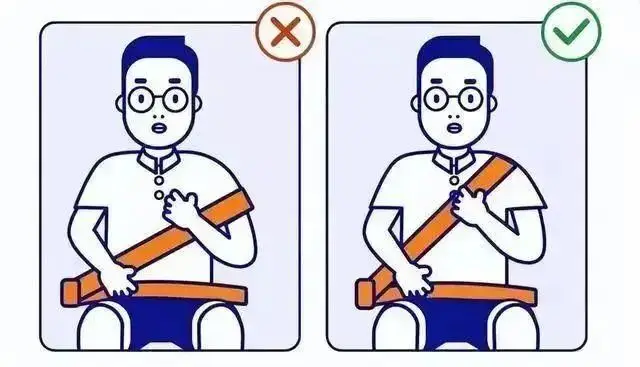
How To Wear A Seat Belt Properly
For adults, the height of the seat belt should first be adjusted according to the person’s height.
The shoulder strap should run across the shoulder and fit snugly against the body. The belt should then be clicked securely into the buckle.
The lap belt should sit across the hips rather than the stomach, while the shoulder strap should rest comfortably across the collarbone. This helps direct the force of a crash towards stronger parts of the skeleton rather than the soft organs.
Pregnant women should position the lap belt low across the hips and below the abdomen, rather than across the stomach. The shoulder belt should run between the breasts and along the side of the abdomen, without pressing against the neck.
The driver’s seat should also be adjusted to maintain sufficient distance between the abdomen and steering wheel while keeping the seat belt securely against the body.
For children, appropriate child restraint systems should be used according to their age and size. Children under 12 should not sit in the front passenger seat.
Children aged four and above who are shorter than 150cm should use an appropriate booster seat or booster cushion if they no longer require a child safety seat.
Traffic authorities reminded motorists to put safety first and ensure that everyone in the vehicle is properly restrained for the entire journey.
Seat belts save lives — buckle up every time.
