


A Malaysian netizen recently urged IT and cybersecurity professionals to share simple safety tips to help the public stay secure online, highlighting that most cyber incidents begin with everyday mistakes rather than master hackers.
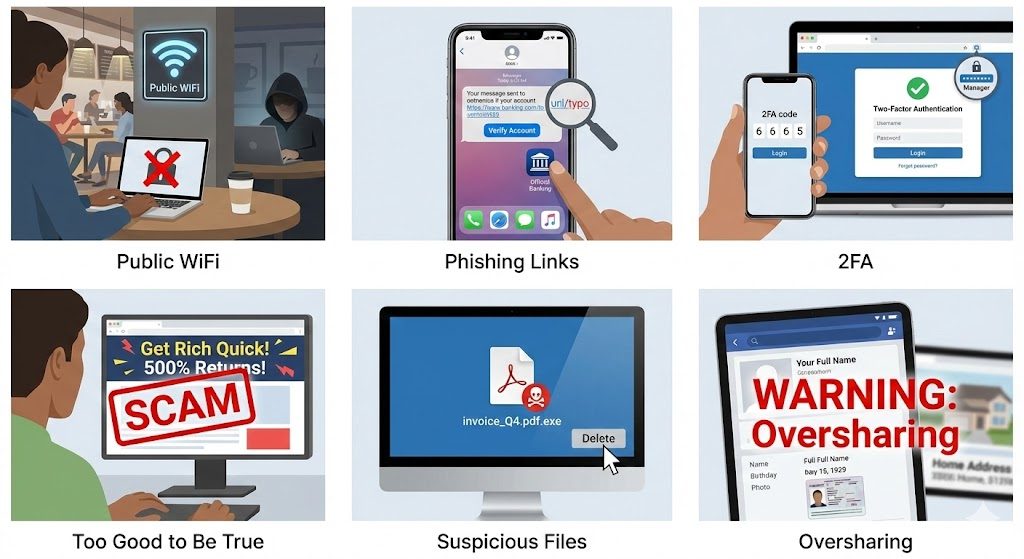
1. Avoid public WiFi for sensitive activities
One of the most repeated warnings was to never access bank accounts or make payments over public WiFi. Open networks are vulnerable to “man-in-the-middle” attacks, allowing hackers to intercept your data. Netizens advised steering clear of online banking, card payments, or any sensitive logins when on shared hotspots. As one user bluntly put it: “Public WiFi? 0% trust.”
2. Banks will never send clickable links
A commenter working in a bank’s digital department stressed that banks don’t send clickable links in marketing emails. Any SMS, WhatsApp message, or email asking you to click a link to verify your account is a major red flag. Instead, always type the official URL directly into your browser, as phishing sites can look almost identical to real ones. Missing just one letter could cost you your savings.
3. Two-Factor Authentication (2FA) is essential
Netizens emphasised that 2FA is no longer optional. Recommendations included using strong, unique passwords, avoiding password reuse, enabling 2FA or multi-factor authentication, relying on trusted password managers, and never saving passwords in Notes apps or messaging platforms.
4. If it’s too good to be true, it probably is
From suspicious Google Forms to investment schemes promising unrealistic returns, users reminded everyone: free money doesn’t exist. Be cautious of surveys asking for your full name, address, job, and income, as scammers often collect and sell personal data rather than hacking systems directly.
5. Beware of suspicious file names
Files ending with extensions like .pdf.exe are likely malware, one netizen warned. Others advised avoiding random APK downloads, third-party apps with unknown security, and uploading company documents to online conversion tools, which can unintentionally expose sensitive corporate data.
6. Oversharing on social media is risky
Cybersecurity extends beyond passwords. Posting identity cards, sharing personal details, uploading sensitive documents to AI tools, or publicly revealing information about children can all make you vulnerable. Even seemingly harmless posts may be valuable to scammers.
The collective advice reinforces that vigilance, common sense, and basic security practices remain the most effective ways to protect oneself in today’s digital landscape.
