


A newly opened park in Shenzhen has been thrust into the spotlight after a bizarre pollution incident saw a lake temporarily turn bright blue, sparking public outrage and online debate.
According to mainland media reports including Aoy News, the incident took place at Longhu Cultural and Sports Park in Longgang District last Saturday (18th). A video circulating online showed an elderly woman washing paint buckets at the edge of the lake. Residual blue paint from the containers then seeped into the water, visibly tinting parts of the lake in a striking turquoise shade.
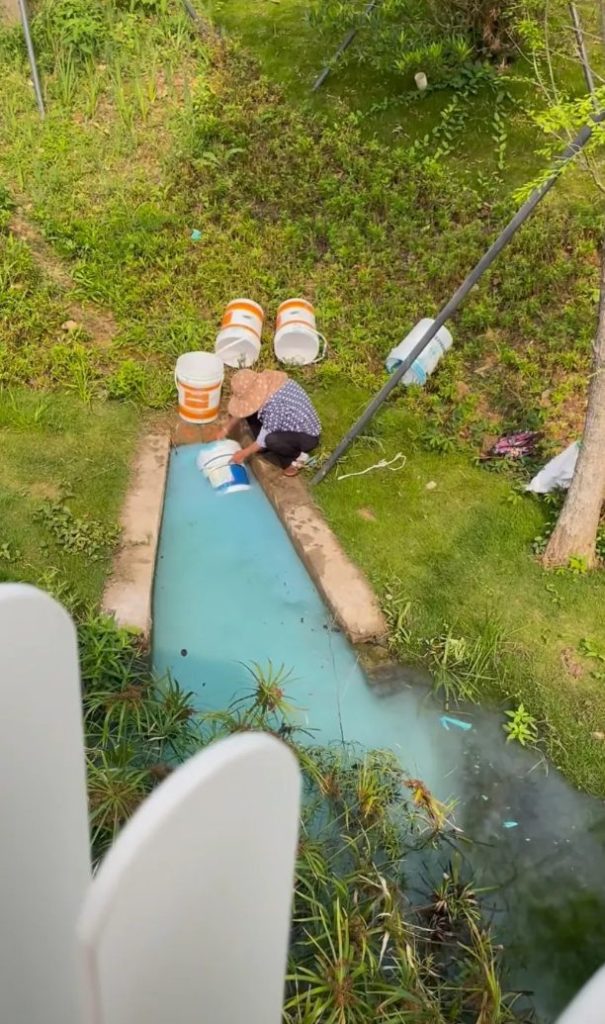
The park, which only opened to the public in February this year, was designed around ecological harmony and green living principles. As such, the incident quickly triggered backlash from netizens, with many criticising the behaviour as irresponsible and calling for authorities to take action.
Some online users even urged that the matter be reported to the police, arguing that the act had damaged a public environmental space and undermined the park’s intended purpose as a nature-friendly recreational area.
However, the Longgang District Baolong Subdistrict Office later issued a clarification, stating that the situation had been misunderstood. Authorities said the buckets involved were originally used for an environmental-grade silicone PU coating applied in a basketball court renovation project, and were later discarded on site.
According to the statement, the resident involved took the buckets for personal reuse and went to the lake to clean them. Officials emphasised that water quality tests were carried out immediately after the incident, and results showed that all indicators remained within safe limits, with no toxic contamination detected.
Despite this, environmental and water authorities still carried out cleanup and water treatment measures as a precaution, including surface clearing and drainage work to restore the lake’s original condition.
The local government has since pledged to strengthen park supervision, increase patrols, install clearer warning signs, and improve construction waste management procedures to prevent similar incidents in future.
