


Chinese President Xi Jinping called on top European Union leaders to “make correct strategic choices” during a high-stakes summit in Beijing on Thursday, as both sides grapple with rising trade tensions and geopolitical strains, particularly over the Ukraine war.
The summit, which was shortened to a single day at China’s request, marked 50 years of diplomatic relations between China and the EU. But expectations were tempered following weeks of mounting disputes over trade imbalances, market access, and critical minerals.
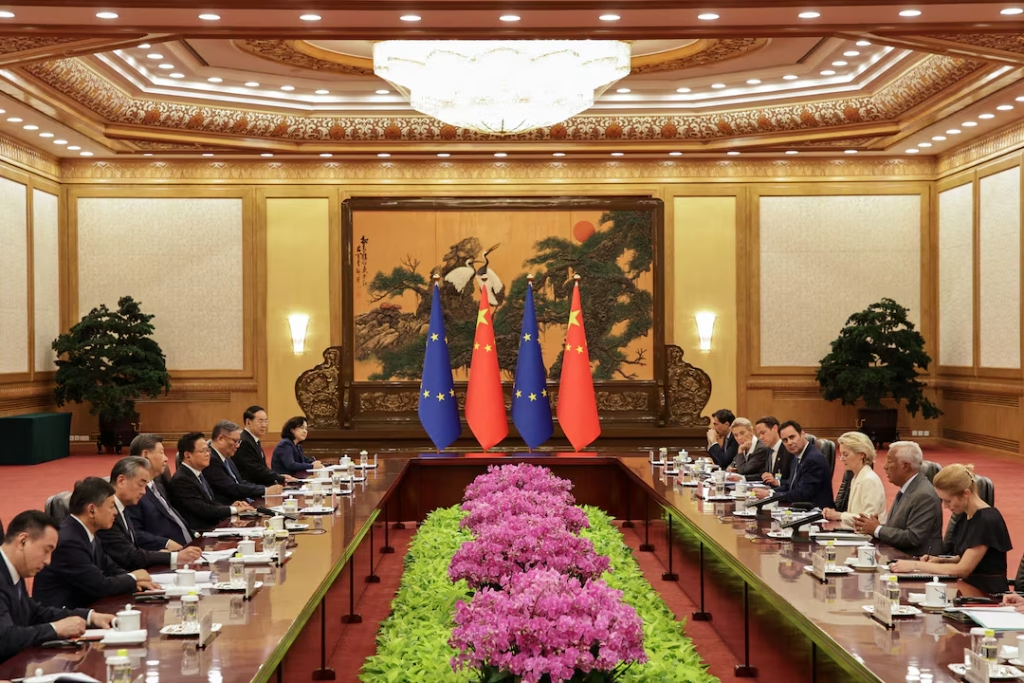
During talks with European Commission President Ursula von der Leyen and European Council President Antonio Costa, Xi emphasized the need for stronger cooperation amid global uncertainties.
“The more severe and complex the international situation, the more China and the EU must strengthen communication, enhance mutual trust, and deepen cooperation,” Xi said, according to state broadcaster CCTV. He urged both sides to act in the interests of their people by making the right strategic choices.
The EU has taken a more confrontational stance in recent months, classifying China as a “partner, competitor, and systemic rival.” Trade disputes and concerns about Chinese industrial overcapacity, especially in the electric vehicle sector, have dominated the bloc’s rhetoric leading up to the summit.
However, von der Leyen signaled a softer tone shortly before arriving in Beijing, posting on X that the summit was a chance to “advance and rebalance” the EU-China relationship. “I’m convinced there can be a mutually beneficial cooperation,” she said.
Chinese state media also sought to downplay hostilities. Xinhua described China as a “critical partner” to Europe, calling for cooperation in areas like climate change, trade, and global governance, while urging that “isolated points of friction” should not overshadow shared interests.
Also on the agenda: Beijing’s April imposition of rare earth export controls, which disrupted European supply chains and briefly halted auto production lines. While China’s exports of rare earth magnets to the EU rebounded in June—up 245% from May—they remained 35% lower than the same time last year, customs data showed.
European leaders are also eyeing a new trade deal with the United States that could impose a 15% tariff on EU exports—lower than the 30% previously threatened by former President Donald Trump.
As the summit closes, both sides appear keen to keep dialogue open, even as competition intensifies on multiple fronts.
