


Humans could have been engaging in games of chance and gambling for around 12,000 years, according to researchers who uncovered what is believed to be the earliest known dice dating back to the Ice Age.
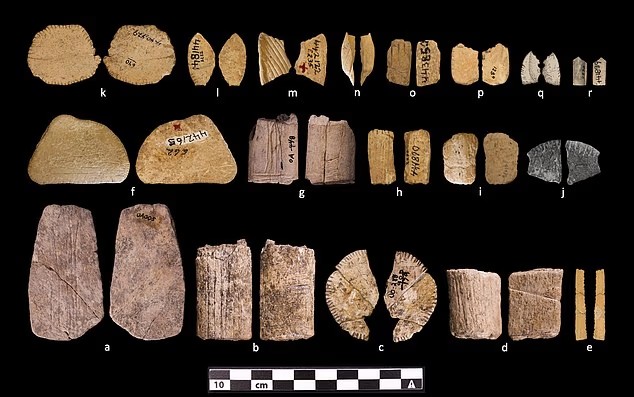
The findings come from a team at Colorado State University, which identified small two-sided dice made from bone fragments at archaeological sites across the western Great Plains of North America. The artefacts are believed to predate previously known dice by more than 6,000 years.
Researchers say the discovery challenges the long-held belief that structured gambling and probability-based games originated in the Old World. Instead, the evidence suggests that early Native American communities were already creating and using objects designed specifically to produce random outcomes thousands of years earlier than previously documented.
The study, published in the journal American Antiquity, examined nearly 600 objects previously classified as possible gaming pieces or overlooked entirely. Among them were small, carefully shaped bone pieces dating as far back as 12,800 to 12,200 years ago.
Unlike modern dice, these ancient tools were not cube-shaped but instead consisted of flat or slightly rounded pieces, often oval or rectangular. Researchers describe them as “binary lots”, with two distinct sides marked differently to indicate outcomes such as “heads or tails”.
These pieces were typically thrown in groups, with results determined by how many landed on a designated marked side. According to the research team, this method created structured systems of chance that were used consistently across different sites and time periods.
Lead researcher Robert Madden said the artefacts demonstrate that ancient communities were deliberately designing tools to generate randomness rather than using bone fragments for decoration or incidental purposes. He added that these items were found at multiple archaeological sites spanning a wide geographic region.
The study also suggests that these early games of chance may have served a broader social purpose. Researchers believe they helped facilitate interaction between groups, enabled trade and exchange, and acted as a neutral system for decision-making in uncertain environments.
Overall, the findings point to the possibility that gambling and probabilistic thinking played a significant role in human societies far earlier than previously assumed, reshaping understanding of recreational and social behaviour in prehistoric cultures.
