


The professional golfing world has been shaken by the arrest of superstar Tiger Woods, who was charged with driving under the influence following a rollover car accident in Florida on Friday. Law enforcement officials confirmed that the incident occurred on a residential street near his home on Jupiter Island. The vehicle Woods was operating reportedly clipped a truck and flipped over while he was attempting to overtake the other driver. Fortunately, the 15-time major winner emerged from the wreckage uninjured, marking yet another turbulent chapter in his high-profile career.
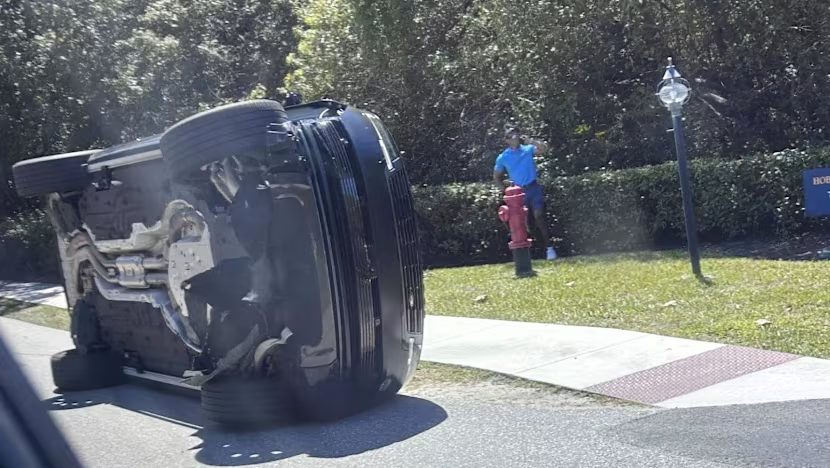
Martin County Sheriff John Budensiek informed reporters that the 50-year-old athlete exhibited clear signs of impairment at the scene of the crash. Although Woods subsequently passed a breathalyser test for alcohol consumption, he was formally charged with DUI after refusing to undergo a urine analysis test. Under Florida law, such a refusal results in an automatic charge, alongside additional counts of property damage and refusing to submit to a lawful testing procedure following a vehicular accident.
Sheriff Budensiek noted that drug recognition experts who evaluated Woods believe he may have been under the influence of some form of medication or narcotic. However, due to his refusal to provide a urine sample—a right he is entitled to under state law—definitive medical results regarding the specific cause of impairment may never be obtained. The Sheriff highlighted the severity of the situation, noting that the crash occurred on a narrow two-lane road where the potential for a head-on collision was high.
While neither Woods nor the occupant of the truck sustained injuries, the physical evidence at the site suggested significant speed. Although a precise speed has not yet been determined, the sheriff pointed out that the 30-mile-an-hour limit was likely exceeded given the distance the vehicle slid before coming to a complete halt. Reacting to the news, President Donald Trump expressed his concern for Woods, describing him as an amazing person and a close friend who is currently facing significant personal difficulties.
This latest legal issue follows a string of physical and personal setbacks for the golfer, including a near-fatal crash in California five years ago that resulted in severe leg injuries. Since that time, Woods has undergone multiple surgeries, including a follow-up procedure in 2023 and an Achilles tendon rupture repair last March. Despite these challenges, he had recently competed in the TGL simulator indoor golf league finals and was considering an appearance at next month’s Masters tournament. Following the arrest, Woods must remain in custody for a minimum of eight hours before he can be released.
