


Humanoid robots dressed in iconic red and yellow uniforms have begun serving meals and entertaining customers at a McDonald’s outlet in Shanghai. The machines, supplied by Chinese firm Keenon Robotics, were deployed as part of a trial that provides a glimpse into a future where automated systems handle routine hospitality tasks. Diners at the Shanghai Science and Technology Museum restaurant were seen interacting with the cyborgs, which are capable of performing dance moves and greeting the public behind the service counters.
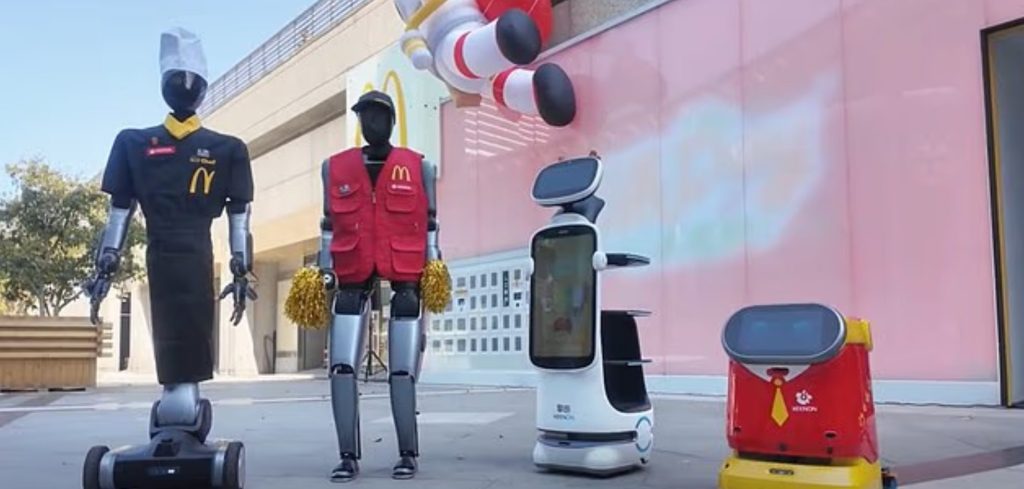
The robotic squad includes a variety of models designed for specific functions within the fast-food environment. While some humanoids, such as the “XMAN-R1” model, focus on customer interaction and brand promotion, others are disguised as cute animals to deliver food directly to tables. Smaller, cube-shaped “Kleenbot” units were also seen navigating the restaurant floor, equipped with triple-brush systems to manage both dry and wet spillages while navigating around crowds and irregular obstacles.
Despite the high-tech display, McDonald’s executive vice president Jon Banner clarified that the deployment was a temporary attraction for the museum restaurant’s grand opening. He stated that the robots were primarily intended to draw attention and were not integrated into the permanent operational or service functions of the branch. The trial lasted approximately five days, yet it has sparked significant discussion online regarding the potential for a wider rollout of autonomous staff in the global fast-food industry.
Technical specifications from Keenon Robotics reveal that the “Dinerbot T10” model uses 3D vision for obstacle avoidance and a six-wheel shock-absorbing chassis to prevent food spillages during sudden stops. While official prices are not listed on the manufacturer’s website, these service models are estimated to retail between £11,500 and £16,000, while the more advanced humanoid models can cost up to $100,000. Proponents of the technology argue that automating kitchens and service areas could eventually lead to stores that require minimal human intervention.
However, the rise of service robots has not been without complications, as evidenced by recent incidents involving malfunctioning units. Last week, a dancing humanoid at a restaurant in San Jose, California, reportedly went out of control, slamming its hands onto a table and scattering food before employees could intervene. Despite these occasional glitches, firms like Keenon Robotics maintain that service automation is becoming a seamless part of the global dining experience, aimed at increasing efficiency and enhancing the customer experience.
