


A 35-year-old office worker in Japan has triggered widespread discussion online after revealing her long-running struggle to find a marriage partner, despite more than a decade of constant matchmaking efforts.
According to Japanese media outlet ABEMA TIMES, the woman, identified as Asuka, has been actively using dating apps for 11 years in pursuit of her goal of becoming a full-time housewife.
Over that period, she is said to have met more than 300 men, but has yet to find a suitable partner matching her expectations.
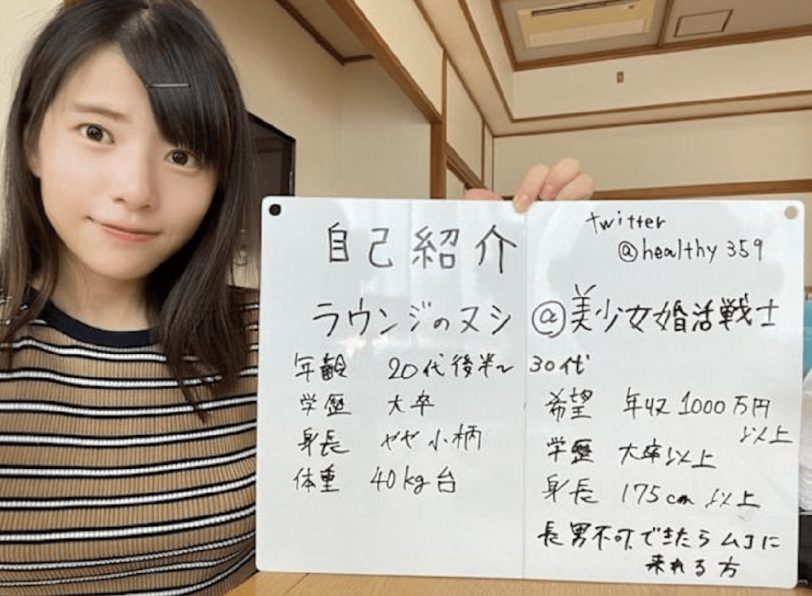
Asuka reportedly set strict conditions, including a preference for attractive men with an annual income of at least 10 million yen (about RM300,000). After years without success, she recently lowered her requirement to 8 million yen (about RM240,000), allowing a wider pool of candidates.
Despite the adjustment, she has still struggled to find a match after meeting around 10 additional candidates.
She explained that her income expectations are tied to her desire not to work after marriage, saying she hopes to rely on her future husband financially.
When told that happiness is possible without a high income partner, she reportedly rejected the idea, insisting she would not be able to maintain her current lifestyle, including basic personal spending.
Beyond financial criteria, she also prefers younger men, ideally two to three years her junior, arguing that youth ensures a longer period before ageing becomes noticeable in the relationship.
Her remarks have reignited debate in Japan over rising singlehood and increasingly strict dating preferences among women.
A recent government survey highlighted that overly high expectations in partner selection have significantly reduced successful matchmaking rates, with experts suggesting that relaxing even one condition such as age, income or education could triple compatibility rates.
Marriage agency representatives also warned that rigid standards can discourage potential partners, stressing that successful relationships require mutual acceptance rather than one-sided expectations.
