


For decades, the United States and Europe have competed fiercely in space innovation — but now, that rivalry has landed in the world of high fashion. While NASA’s next-generation spacesuits are being crafted with design input from luxury powerhouse Prada, astronauts at the European Space Agency (ESA) will be stepping into something far more accessible: a suit designed by Decathlon.
The global high-street sports retailer, known for its affordable activewear, has revealed its role in developing a new intra-vehicular activity (IVA) suit prototype. The sleek, dark-grey “EuroSuit” is engineered for critical mission phases such as launch and landing and can be put on or removed in under two minutes without assistance — a first-of-its-kind capability for IVA suits.
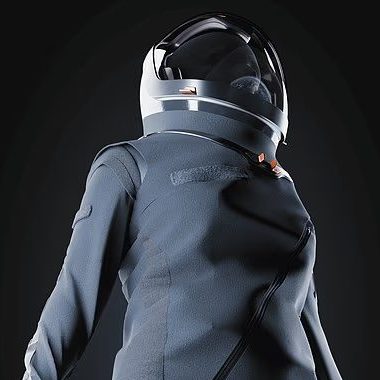
The suit will undergo real-world testing next year aboard the International Space Station (ISS) by ESA astronaut Sophie Adenot. Her feedback will guide the creation of a fully operational version equipped with airtight sealing, fire resistance, built-in communications, and head-up display systems.
Decathlon says the collaboration highlights its ability to bring sports-innovation expertise into extreme environments. “The EuroSuit embodies our ability to push the boundaries of innovation beyond our traditional fields,” said Sébastien Haquet, Decathlon’s Head of Advanced Innovation.
A High-Street Suit vs. a High-Fashion Suit
The contrast between ESA’s EuroSuit and NASA’s Prada-advised spacesuit could not be more striking. Prada — renowned for its luxury handbags and runway collections — is working with Axiom Space to design NASA’s new AxEMU suit for the 2026 Artemis III moon mission. The AxEMU is built for lunar exploration, with advanced mobility, temperature resistance, and custom-tailored flexibility for both male and female astronauts.
Meanwhile, the EuroSuit focuses on practicality aboard spacecraft. Key features include:
- Custom-fit helmet lattice for tailored ergonomics
- Bellows at shoulders, elbows, and knees for improved mobility
- Air-tight zippers with ergonomic pullers
- Adjustable torso length to accommodate astronauts’ height changes in microgravity
ESA developed the suit in partnership with the French space agency CNES, start-up Spartan Space, and the Institute of Space Medicine and Physiology.
Europe’s Next Step Toward Space Autonomy
CNES says the project aligns with Europe’s goal of becoming more independent in human spaceflight. “By relying on the exceptional expertise of our partners, we are prepared to deliver this type of suit when the time comes,” said Sébastien Barde, CNES Deputy Director for Exploration and Human Spaceflight.
As Decathlon prepares its prototype for testing on the ISS and Prada readies NASA’s advanced lunar suit, the race between high fashion and high function has officially taken off. Whether astronauts prefer the sleek practicality of Decathlon or the couture craftsmanship of Prada, one thing is clear — the future of spacewear has never been more stylish.
