


An e-sports broadcast in China has sparked widespread online debate after host ZhaZha faced criticism over her on-stage outfit, later responding with a dramatic on-air transformation that quickly went viral.
The incident took place during the NBPL esports competition for Naraka: Bladepoint, where ZhaZha appeared in a short skirt while presenting live. Her appearance, including a moment where she sat cross-legged at the desk, was widely circulated online and drew mixed reactions from viewers.
Some social media users accused her of dressing “too revealing” and claimed she was attempting to attract attention or appeal to the “male gaze”, while others questioned whether organisers had influenced wardrobe choices to boost viewership. These claims have not been verified.
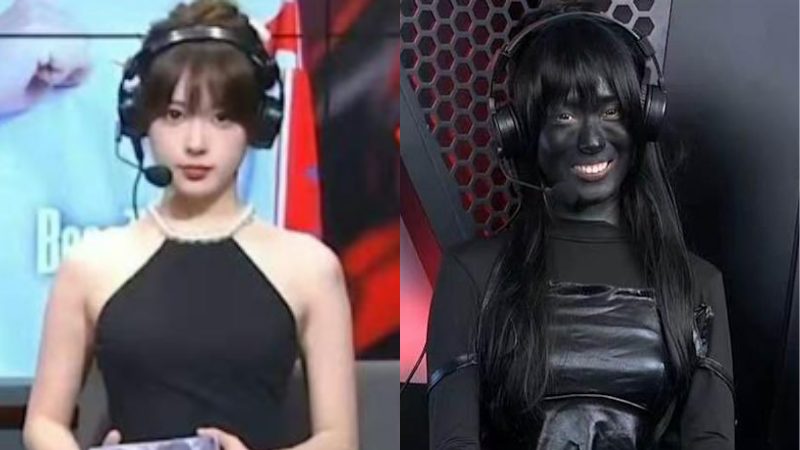
ZhaZha later addressed the controversy on social media, stating that her outfit choice was entirely her own and that organisers did not impose any dress requirements. She also responded to other online speculation regarding her posture and appearance during the broadcast.
Despite her clarification, the discussion intensified across social media, with both criticism and support continuing to spread, highlighting ongoing debates around gender representation and appearance standards in esports.
In a later broadcast, ZhaZha shocked viewers by appearing in a full black outfit, including gloves and stockings, while also painting her face completely black in a striking visual transformation inspired by an “all-black” concept.
The move quickly went viral, with clips widely shared online and sparking renewed discussion about online harassment, double standards, and the pressures faced by women working in esports and live entertainment.
However, the reaction was not entirely positive. While some netizens praised her for the bold statement, others argued that the action may have crossed a line, with criticism suggesting it resembled cultural appropriation due to the use of full-face black paint, often associated with “blackface” controversies in Western contexts.
Many viewers still interpreted the stunt as a form of protest against her critics, but the debate has since expanded beyond esports, raising broader questions about intent, cultural sensitivity, and the boundaries of online expression.
