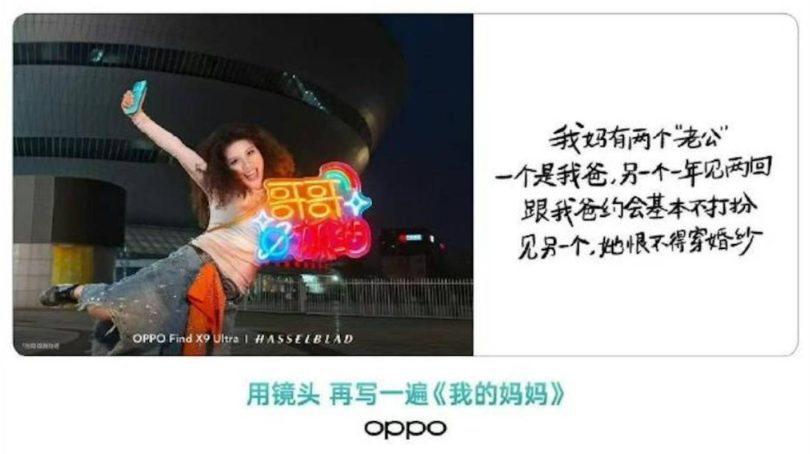
Chinese smartphone maker OPPO has come under intense public criticism after a promotional campaign featuring the phrase “Mother Has Two Husbands” sparked widespread backlash over its perceived vulgar and inappropriate tone.
The controversial Mother’s Day-themed advertisement attempted to use a “fan culture” concept to portray a modern and diverse image of motherhood. However, it was quickly condemned online, with many netizens accusing the campaign of distorting family values and crossing ethical boundaries in advertising.
As public anger escalated, attention turned to the creative team behind the campaign. The team leader, identified as a Wuhan University alumnus, triggered further online debate, with some users unfairly linking the incident to the university’s education standards and institutional reputation.
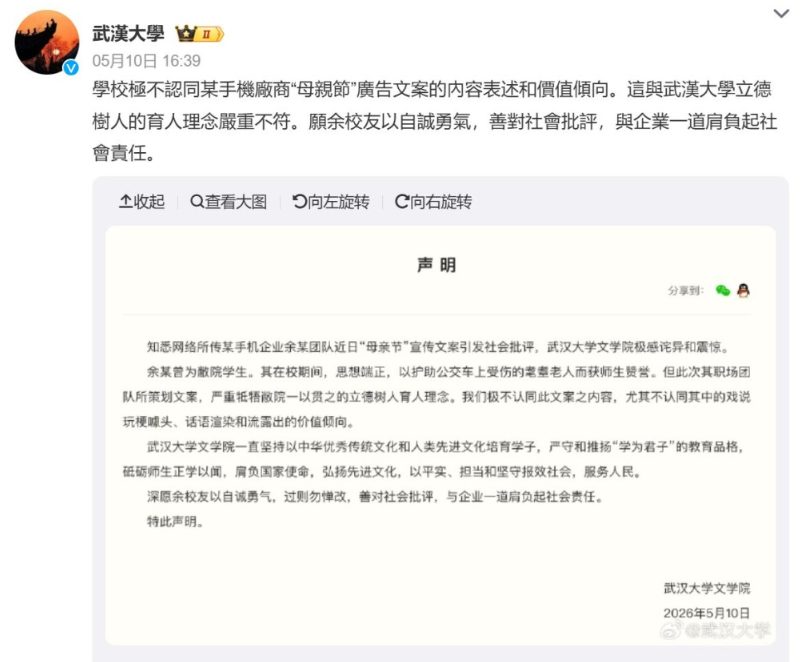
In response, Wuhan University issued a formal statement distancing itself from the individual involved, stressing that the content and values expressed in the advertisement were inconsistent with the university’s educational principles and moral standards. The institution also urged its alumnus to face public criticism responsibly while working with the company to address social concerns.
OPPO also released an internal accountability report the following day, imposing unusually strict disciplinary actions across multiple management levels. According to the company, the China business head, Duan Yaohui, was demoted by two ranks and had his salary adjustments frozen for 36 months.
Other senior staff also faced penalties, including a departmental head who was demoted and had salary adjustments frozen for one year, while the public relations department head received a downgraded performance rating and salary freeze. Members of the project team were also demoted and placed under strict performance restrictions.
The China Advertising Association weighed in on the controversy, warning that such marketing approaches set a concerning precedent for the industry. It said campaigns that rely on sensationalism or distort family relationships for attention risk undermining public trust in advertising as a whole.
Despite OPPO’s apology and removal of the campaign, public debate continued to intensify online. Some users praised Wuhan University for taking a firm stance, while others criticised the institution’s response as unnecessary and an example of overreaction to online sentiment.
The incident has since sparked wider discussion in China over corporate responsibility, creative boundaries in advertising, and whether educational institutions should be held accountable for the actions of their graduates.