


NASA has unveiled ambitious new plans to build a permanent base on the Moon, revealing futuristic robotic landers, hopping drones and lunar vehicles designed to support future human missions.
The project forms part of the United States’ push to return astronauts to the Moon before Donald Trump leaves office in 2029, while also intensifying the growing space race with China.
Among the companies selected to help develop the technology is Blue Origin, the space company founded by Jeff Bezos.
Other firms awarded contracts include Intuitive Machines and Astrobotic.
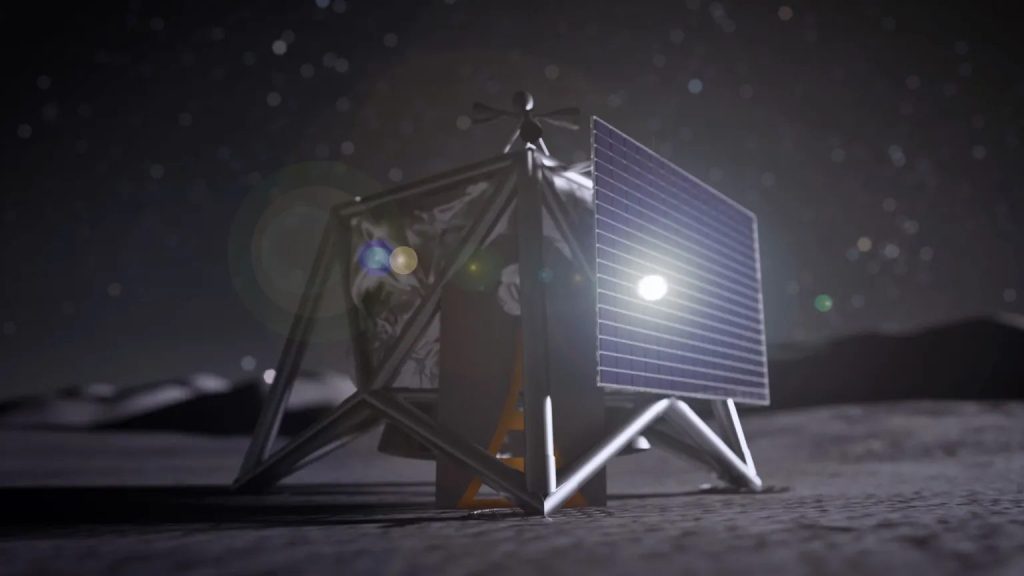
Nasa’s massive US$20 billion Moon Base programme aims to establish a semi-permanent lunar settlement near the Moon’s south pole by 2032 using nuclear and solar-powered systems.
According to Nasa administrator Jared Isaacman, the latest announcements prove the United States will “never give up the Moon again”.
The space agency plans to first send robotic landers and AI-powered hopping drones to map and explore the Moon’s rugged terrain before astronauts arrive.
Special lunar vehicles and rovers will also be deployed to transport astronauts, communication systems and scientific equipment across the rocky surface.
Blue Origin’s lunar lander, named Endurance, is expected to carry out highly precise autonomous landings, while Astrobotic’s Griffin-1 lander is targeted to land near the Nobile Crater at the Moon’s south pole.
The robotic exploration phase is expected to continue until 2029, involving around 25 launches and the delivery of four metric tonnes of cargo to the lunar surface.
Nasa also intends to construct nuclear fission reactors and solar energy systems on the Moon to support future human habitation.
By 2032, astronauts are expected to live in semi-permanent lunar housing, with advanced rovers enabling long-distance travel across the Moon.
Scientists believe the Moon’s south pole could become a major strategic location due to the presence of frozen water, which may eventually be converted into drinking water and oxygen.
However, some experts remain sceptical about Nasa’s ambitious timeline.
Despite the success of the Artemis II mission earlier this year, several scientists believe China could still become the next country to land humans on the Moon first.
China has been aggressively advancing its own lunar ambitions and recently launched the Shenzhou-23 mission carrying astronauts to the Tiangong space station.
One of the biggest challenges facing Nasa remains the development of a spacecraft capable of safely landing astronauts on the Moon.
SpaceX, owned by Elon Musk, is currently building the Starship Human Landing System, though the programme has faced repeated delays and technical setbacks.
Experts say political pressure is also driving the urgency behind Nasa’s latest Moon ambitions as the battle for dominance in the new space race continues to heat up.
